
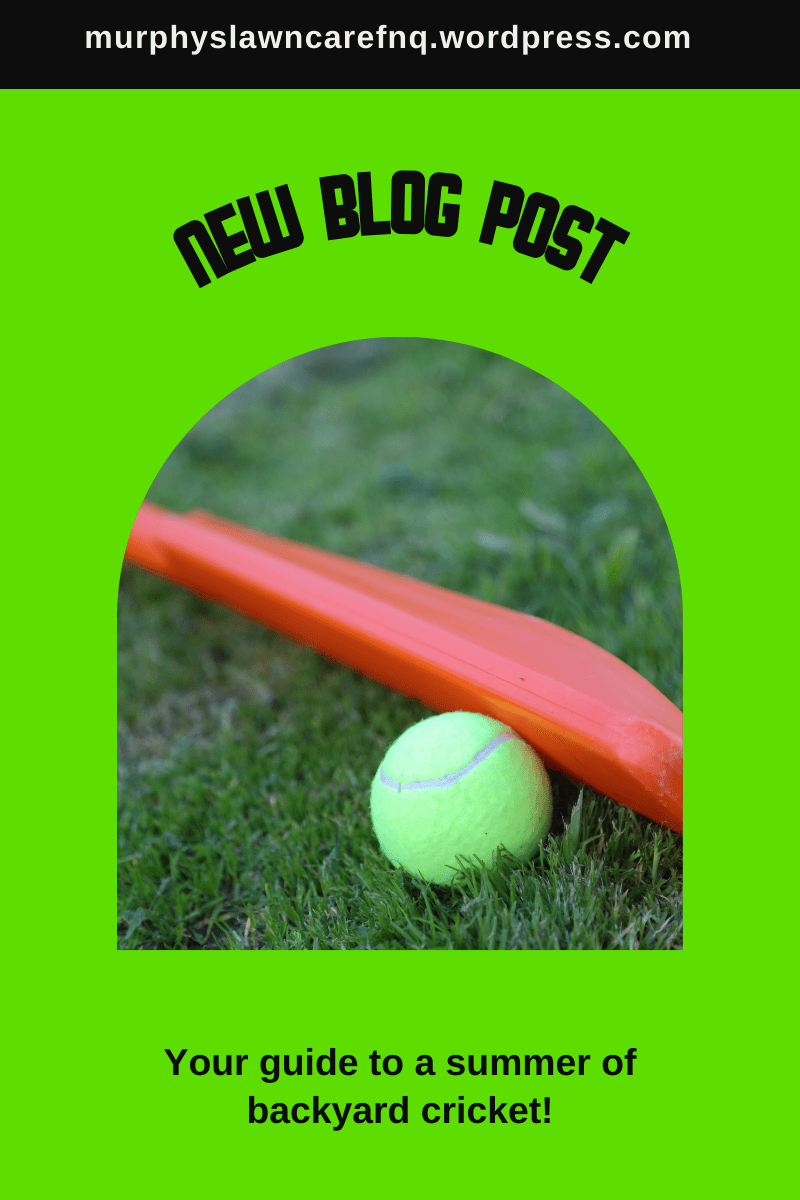
The best part about a lush lawn is making your own backyard cricket pitch!
Pitch
Pitch preparation is best undertaken in spring or summer when your grass is actively growing. Avoid mowing low in winter.

Location
The best spot for a pitch is in front of the shed, a fence, or wall. This creates an automatic wicketkeeper for one-on-one games. Keep in mind where four runs or six and out will be and where the best spot to bowl from is.
Once you’ve picked your spot, mark the length. For older kids you may wish to make the pitch longer as your yard allows. For littlies you prefer it a bit shorter.
Mowing
Ask the Murphy’s men to drop the cutting deck, to mow the pitch into the existing lawn nice and short for optimum bounce.
If you’re doing it yourself between visits, remember not to mow down to dirt. You may have to go over it a few times, depending on grass thickness, to make your wicket. Keep your catcher on to remove clippings so there is nothing left on the surface.
Stumps
It’s time to set up stumps! If you have wooden stumps and bails, knock ‘em in, or place metal stumps in position.
If you’re stumps-less and need to get more creative, go for the good old council bin, Esky or check out this homemade bottle stumps tutorial.
To make the crease, grab marking paint. Typically the crease is the length of your bat plus its handle.
Aftercare
Once your innings is over, aerate the pitch and give it a drink. You may need to lay off it for a few days to allow it to recover.
Fun Fact
Did you know?
A Dibbly dobbly or dibbly dobbler is cricket jargon for a medium pace delivery, neither fast nor slow, with no special variation, a bowler who uses this type of delivery as their stock ball or a delivery that is easy to hit, but difficult to score quickly from.
Check out these other cricket terms!
 Murphy's Lawn Care FNQ